Quartz vs Granite Countertops: Charlotte Prices, Care and Real Costs

Quartz vs granite countertops: choose quartz if you want a low-maintenance surface with a consistent look that never needs sealing; choose granite if you want a natural stone that handles heat well and starts at a lower price. In Charlotte, granite at Cornerstone starts at $29.95 per square foot installed. Both are excellent kitchen countertops, and the right one depends on how you cook and clean.
Summary
- Granite is natural stone; quartz is engineered from crushed quartz bound with resin.
- Granite at Cornerstone starts at $29.95/sq ft installed, with sink installation included.
- Quartz needs no sealing; granite needs periodic sealing but tolerates heat better.
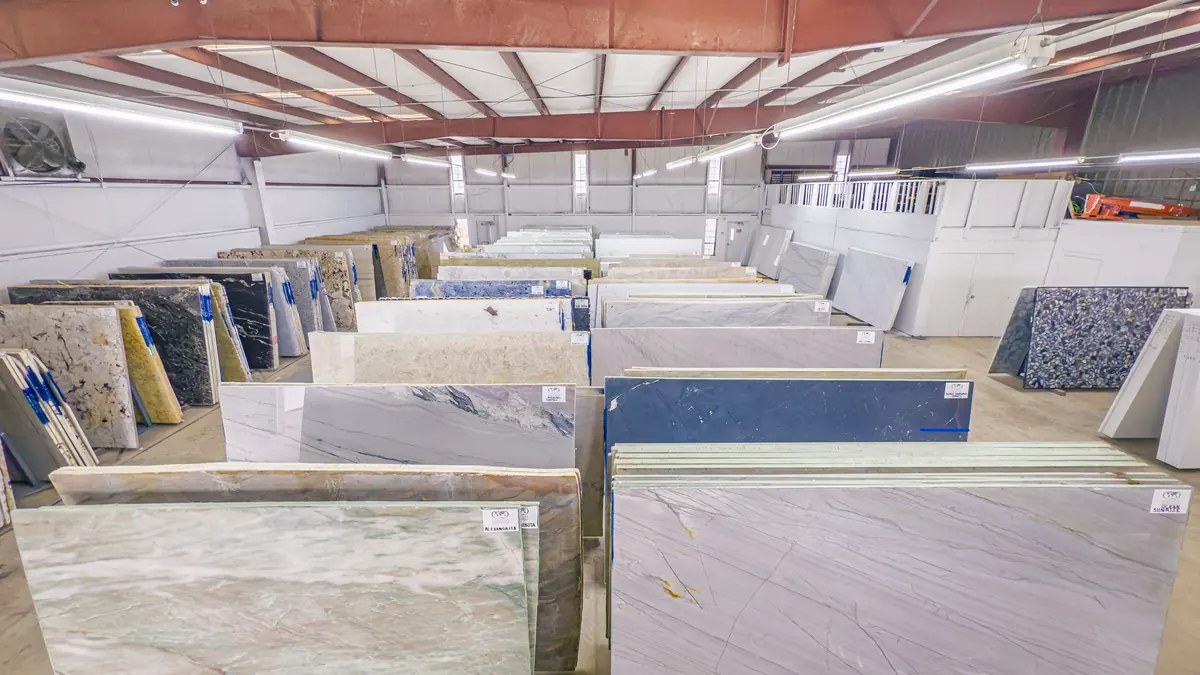
- Our best seller is white quartz with gray and gold veins; see both in our yard.
Quartz vs Granite at a Glance
The short version: quartz wins on easy care and consistency, and granite wins on heat tolerance, natural character and starting price. The table below compares them on the points homeowners ask us about most.
| Factor | Quartz | Granite |
|---|---|---|
| What it is | Engineered: ground quartz bound with resin and pigments | Natural igneous rock, cut from a quarry |
| Look | Consistent color and pattern from slab to slab | Every slab is unique |
| Sealing | Not needed | Periodic sealing recommended |
| Heat | Use trivets; high heat can mark the resin | Tolerates heat well |
| Outdoor kitchens | Usually recommended for indoor use | A strong choice outdoors |
| Starting price at Cornerstone | Priced by slab tier, starting at $29.95/sq ft installed | From $29.95/sq ft installed (Classic) |
| Warranty at Cornerstone | 1-year workmanship + limited 15-year quartz warranty | 1-year workmanship |
| Install time at Cornerstone | 7 business days after template | 7 business days after template |
What Is the Difference Between Quartz and Granite?
Granite is a natural stone cut in one piece from a quarry, while quartz is a manufactured slab made mostly of crushed quartz mineral held together with resin. That single difference explains almost everything else: look, care and how each one handles heat.
Granite: Natural Stone From the Quarry
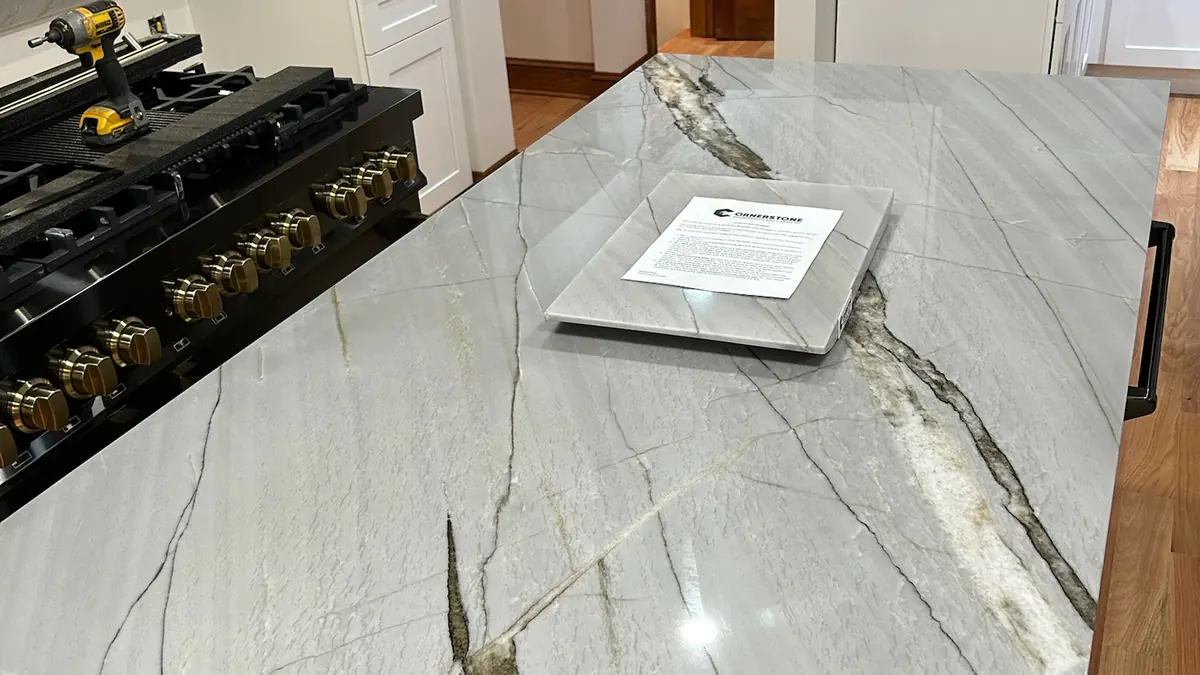
Granite is an igneous rock that formed as magma cooled deep underground. It is quarried in large blocks, sliced into slabs and polished. Because nature made it, no two slabs are the same: the color, the flecks and the movement change from one slab to the next, and even across a single slab.
Granite is hard and handles heat well. Like most natural stone it has some porosity, which is why a periodic sealer helps it resist stains. Granite is also available in finishes such as polished, leathered (a textured, matte feel) and honed (smooth and matte).
Quartz: Engineered Stone Made With Resin
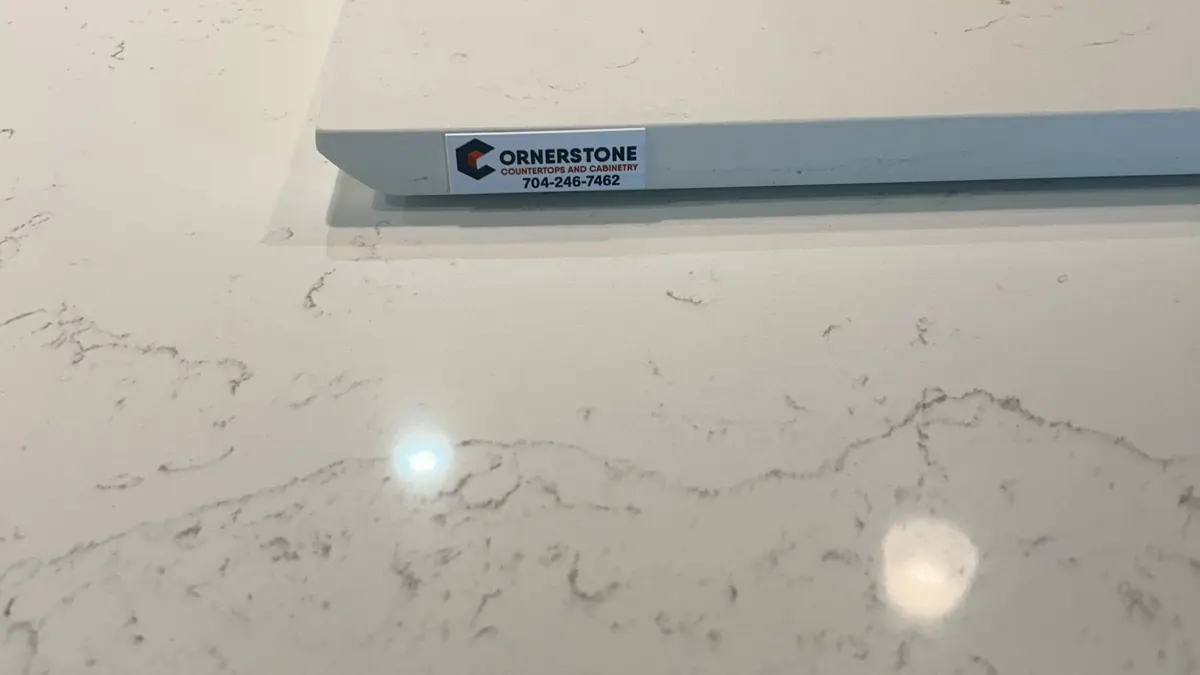
Quartz countertops, also called engineered stone, are made by blending ground natural quartz with resin and pigments, then pressing the mix into slabs. The result is a non-porous surface with a predictable pattern, which is why quartz can imitate marble veining so closely.
The resin is what makes quartz easy to clean and stain-resistant. It is also the reason quartz should be protected from direct high heat and is usually kept indoors, away from strong sun.
How Much Do Quartz and Granite Countertops Cost in Charlotte?
At Cornerstone, granite countertops start at $29.95 per square foot installed for Classic Granite. Your final price depends on the stone's tier, the square footage, the edge profile and extras such as tear-out.
Cornerstone Starting Prices
Every slab in our yard falls into a price tier based on its rarity and look. These are our starting prices per square foot, installed, with templating, a flat polished edge and kitchen sink installation included:
- Classic Granitefrom $29.95
- Semi-Exoticfrom $58.95
- Super Exoticfrom $119.95
- Semi-PreciousCall for pricing
Tear-out of your old countertop and shaped edge profiles are quoted separately, so you see them as their own lines. See the full breakdown on our countertop prices page.
How to Estimate Your Own Kitchen
Measure your countertop runs in square feet and look at the starting price of the tier you like, granite or quartz. The starting price already covers templating, cutting, a flat polished edge, installation and setting the kitchen sink. Your written quote then names the exact slab and its price, so you compare real numbers, not estimates.
Durability: Heat, Scratches and Stains
Both materials are durable enough for a busy family kitchen. The differences show up with hot pans, acidic spills and how much care you want to give the surface.
Heat
Granite tolerates heat well, which is one reason it is popular in outdoor kitchens. Quartz contains resin, and direct high heat can mark the surface, so use a trivet for hot pans and slow cookers. A trivet is a good habit on any countertop.
Scratches
Granite and quartz are both hard surfaces that resist everyday scratches well. Neither is a cutting board: knives dull quickly on stone, and a board protects both the blade and the finish.
Stains and Sealing
Quartz is non-porous, so spills such as wine, coffee and oil stay on the surface and wipe off. Granite has some porosity; a periodic sealer gives you time to wipe up a spill before it soaks in. Sealing is a quick job, and we explain the right routine for your stone when you pick it.
Care and Maintenance
Daily care is the same for both: mild soap, warm water and a soft cloth. The difference is that granite benefits from periodic sealing and quartz does not.
| When | Quartz | Granite |
|---|---|---|
| Every day | Mild soap and water, soft cloth | Mild soap and water, soft cloth |
| Spills | Wipe when convenient | Wipe soon, especially oil and wine |
| Hot pans | Always use a trivet | Trivet recommended |
| Avoid | Bleach and harsh cleaners | Bleach, harsh and acidic cleaners |
| Periodically | Nothing extra | Reseal on the schedule we recommend for your stone |
Which Looks Better? Style and Color Trends
Quartz gives you a clean, even look and convincing marble-style veining; granite gives you one-of-a-kind patterns and depth that only natural stone has. Which looks better depends on the style of your kitchen.
The kitchen industry expects quartz and natural quartzite to lead countertop choices in the coming years, according to the NKBA/KBIS 2026 Kitchen Trends Report. Lighter, warm whites and full-height stone backsplashes are rising too.
What Charlotte Homeowners Choose Most
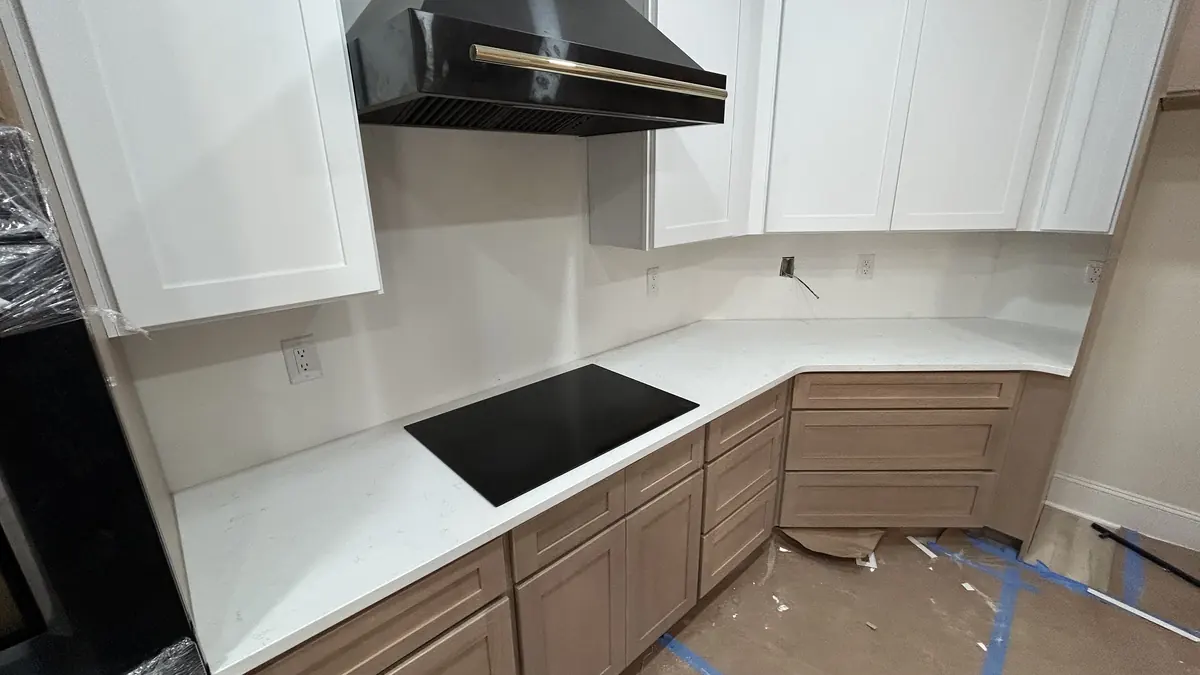
In our shop, the best-selling surface is white quartz with gray and gold veins, a look close to Calacatta marble without the marble upkeep. Among natural stones, Taj Mahal quartzite is trending. Granite remains the most affordable natural stone in our yard and a frequent pick for outdoor kitchens. See our calacatta quartz colors.
Quartz or Granite: How to Decide
Decide by matching the material to your habits: how you cook, how much upkeep you want and whether the stone goes inside or outside.
Choose Quartz If
- You want a surface that never needs sealing
- You prefer a consistent color across the whole kitchen
- You love the white marble look without the upkeep
- The countertops are indoors
Choose Granite If
- You want natural stone with a one-of-a-kind pattern
- You often set down hot cookware
- You want the lowest starting price in our yard
- The countertops are for an outdoor kitchen
Still between the two? Compare them in person. Seeing full slabs under real light usually settles it in a few minutes. If quartzite is also on your list, read our quartzite vs quartz comparison.
Health and Safety: Engineered Stone and Silica
Engineered quartz contains crystalline silica, and the health concern is the dust created while cutting slabs in a shop, not a finished countertop in your kitchen. We cut every slab on an automated CNC with water to keep dust under control.
For more on how regulators and fabricators handle this, read what homeowners should know about engineered stone and silica.
Frequently Asked Questions
Is quartz cheaper than granite?
Not usually. At Cornerstone, Classic Granite has the lowest starting price in our yard, from $29.95 per square foot installed. Quartz pricing depends on the color and brand.
Which is more durable, quartz or granite?
Both are very durable for daily cooking. Granite handles heat better; quartz resists stains better and needs no sealing.
Can I put a hot pan on quartz?
Use a trivet. Because quartz is bound with resin, a hot pan set straight on it can leave a mark.
Does granite need to be sealed?
Yes, periodically. Sealing helps granite resist stains, and we explain the right schedule for your stone when you choose it.
Is granite outdated in 2026?
Not for many homeowners. Granite stays popular for busy kitchens and outdoor kitchens and is the most affordable natural stone in our yard. See granite countertops in Charlotte.