Engineered Stone Silica: What Homeowners Should Know in 2026

Engineered stone, often called quartz, contains crystalline silica. The engineered stone silica risk is the fine dust created when slabs are cut, ground and polished in a fabrication shop, which can harm workers who breathe it without controls. A finished, installed countertop does not release that dust in normal kitchen use. At Cornerstone, every slab is cut on an automated CNC with water to keep dust down.
Summary
- The health risk is dust from fabrication, not a finished countertop.
- Engineered quartz typically contains more silica than most natural stones.
- Regulators tightened rules in recent years, and Australia stopped using engineered stone in 2024.
- Wet cutting and automated machines reduce the dust created in the shop.
What Crystalline Silica Is and Where It Comes From
Crystalline silica is a common mineral found in sand, quartz and many natural stones. Engineered quartz countertops are made mostly of ground quartz bound with resin, so they typically contain a high share of it, generally more than granite or marble.
Silica in a solid countertop is harmless to touch. The concern is respirable dust: tiny particles produced when stone is cut, ground or polished dry.
Who Is Actually at Risk
The people at risk are fabrication workers who breathe stone dust over time without proper controls. Long-term exposure can cause silicosis, a serious lung disease. That is why dust control in the shop matters so much.
| Situation | Dust exposure |
|---|---|
| Dry cutting slabs in a shop | High without controls |
| Wet cutting on an automated CNC | Much lower |
| Living with an installed countertop | None in normal use |
| Cleaning or cooking on quartz | None |
What Changed for Engineered Stone in 2023 and 2024
Regulators paid closer attention to fabrication shops after a rise in silicosis cases among stone workers. In late 2023, California adopted emergency rules for shops that cut engineered stone. In July 2024, Australia stopped the use of engineered stone altogether. In the United States, federal workplace rules already limit silica exposure in fabrication.
These rules target how slabs are cut and finished, not how countertops are used at home.
How We Keep Dust Down in Our Shop
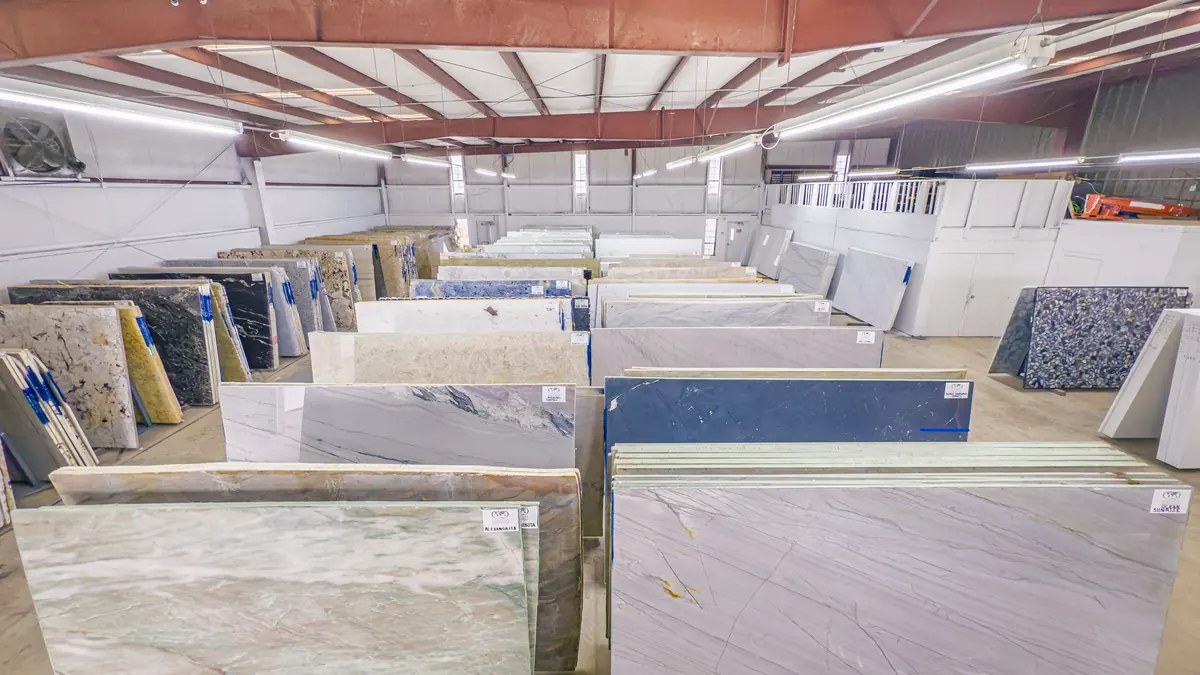
Every slab in our Charlotte shop is cut on an automated CNC machine with water. Water captures dust at the blade, and automation keeps people farther from the cutting point. Edges and sink openings are finished with wet tools as well.
If you prefer a natural stone, granite and quartzite are good alternatives. If you love quartz, see our quartz slabs; quartz itself is safe in your home.
Living Safely With Quartz Countertops
Clean quartz with mild soap and water, use trivets for hot pans and avoid harsh chemicals. Our guide on can you put hot pans on quartz covers daily care, and calacatta quartz vs marble compares quartz with a natural alternative. Browse more countertop stone guides.
Frequently Asked Questions
Is my quartz countertop dangerous?
No. In normal kitchen use, an installed countertop does not release silica dust.
Who is at risk from engineered stone silica?
Workers who cut and polish slabs without proper dust controls.
Does granite contain silica?
Yes, but usually much less than engineered quartz.
Did any country ban engineered stone?
Australia stopped the use of engineered stone from July 2024.
How does Cornerstone cut quartz?
On an automated CNC with water, which keeps dust down at the source.