Quartzite vs Quartz: Which Is Nicer and Which Lasts Longer

Quartzite vs quartz: quartzite is a natural metamorphic stone that is very hard, handles heat and sun well and needs periodic sealing; quartz is an engineered surface that never needs sealing but should be kept away from direct heat and strong sun. If you want natural veining and outdoor or heavy-cooking toughness, choose quartzite. If you want the easiest daily care and a consistent look, choose quartz.
Summary
- Quartzite is natural stone formed from sandstone; quartz is mostly ground quartz bound with resin.
- Both rate about 7 on the Mohs scale, so both resist scratches well.
- Quartzite tolerates heat and UV; quartz needs trivets and stays indoors.
- Quartz never needs sealing; quartzite needs a sealer on a schedule.
Quartzite vs Quartz at a Glance
The two names sound alike, but they are very different materials. Quartzite comes out of a quarry as a block of natural stone; quartz is made in a factory from crushed quartz mixed with resin and pigments.
| Quartzite | Quartz | |
|---|---|---|
| What it is | Natural metamorphic stone | Engineered stone with resin |
| Look | Natural veining; every slab unique | Consistent color and pattern |
| Scratch resistance | Very high | Very high |
| Heat | Handles hot pans and grills well | Use a trivet; resin can mark |
| Sun and outdoors | Suitable | Not recommended |
| Sealing | Periodically | Never |
Which Is Nicer: Natural Veining or a Consistent Look?
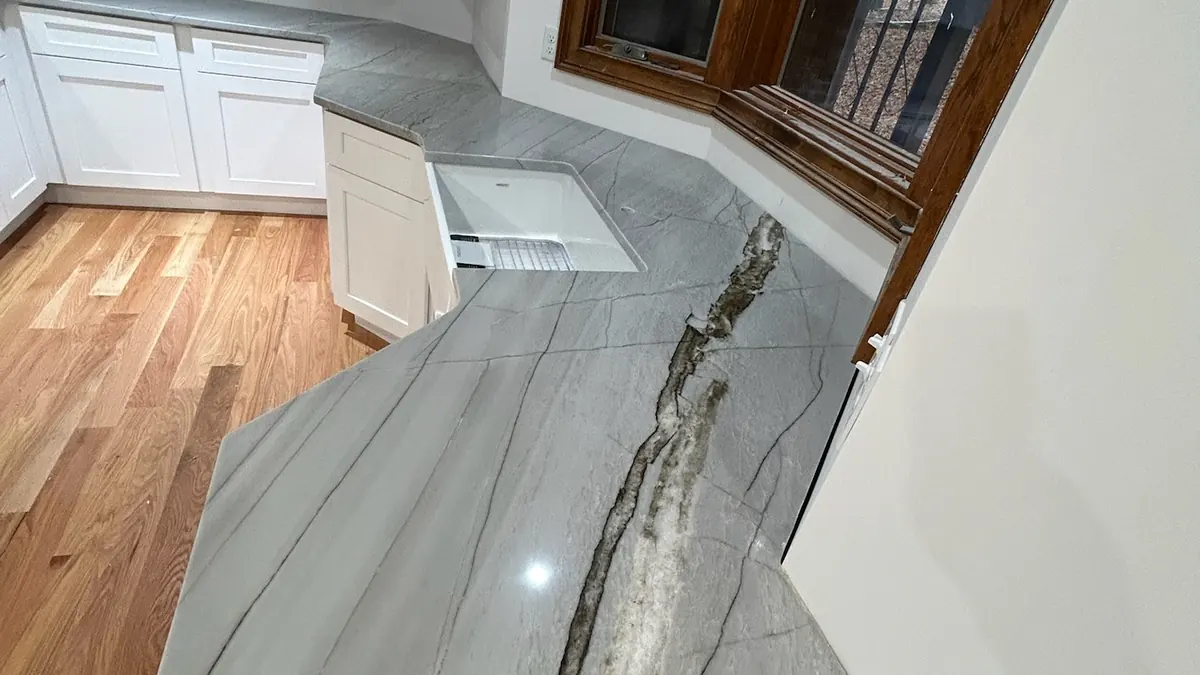
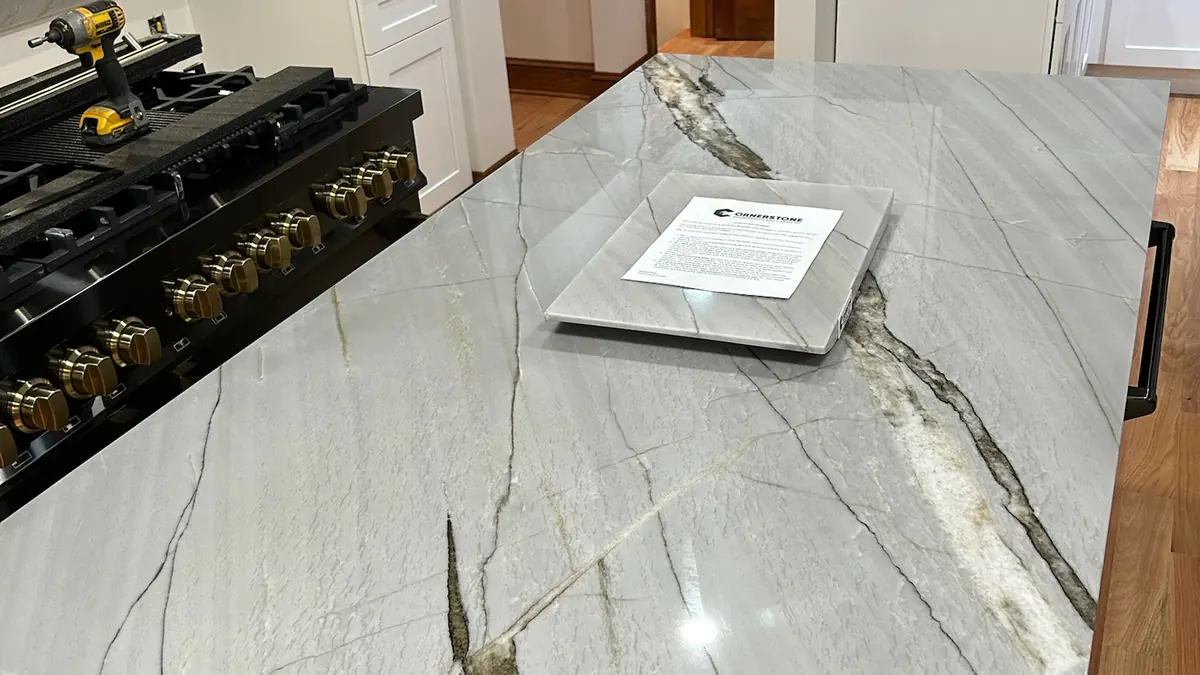
"Nicer" depends on what you value. Quartzite gives you movement that no factory can repeat: soft waves, crystals that catch the light and color shifts across the slab. Quartz gives you control: you can match a sample, extend a run with a second slab and know the island will look like the perimeter.
When Quartzite Looks Better
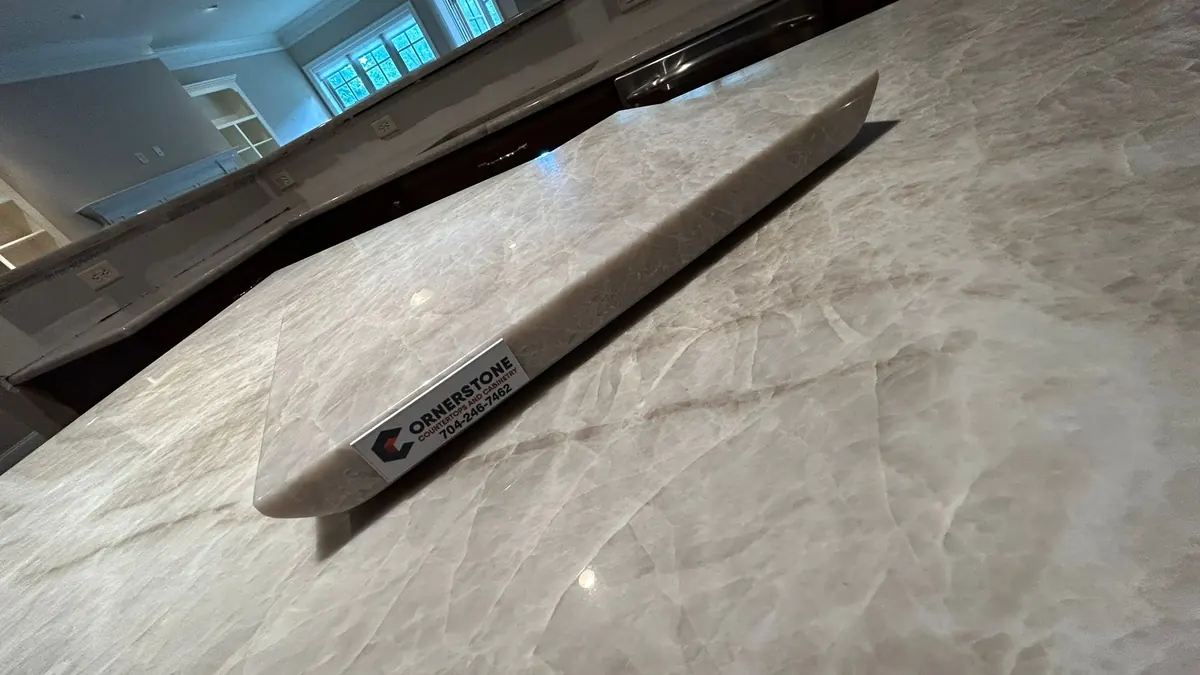
On a large island or a full-height backsplash, natural veining has room to show. Warm stones like our Taj Mahal quartzite also pick up light in a way that flat-colored surfaces don't.
When Quartz Looks Better
In a busy kitchen with many seams, or where you want a bright, clean white, quartz is easier to keep consistent. Our best seller is white quartz with gray and gold veins, which reads like marble from a distance.
Which Lasts Longer in a Real Kitchen?
Both last for decades when cared for. The difference is in what each one tolerates on a bad day.
Heat
Quartzite is natural stone, so a hot pot set down briefly won't hurt it. Quartz contains resin, which can scorch or discolor under direct high heat. With quartz, trivets are not optional.
Stains
Quartz is non-porous, so wine and oil wipe away. Quartzite is dense but natural, so it relies on a sealer to keep oils from soaking in. Sealing is quick and you can tell when it is due with a simple water test.
Etching
True quartzite does not etch from lemon or vinegar. If a "quartzite" sample does etch, it contains calcite and is likely a softer stone. Our guide on how to tell quartzite from marble shows how to check before you buy.
Outdoors and Sunny Rooms
For an outdoor kitchen or a counter under a big sunny window, quartzite is the safer choice. UV light can slowly change the resin in quartz, while natural quartzite holds its color.
Indoors, away from direct sun, quartz keeps its look for many years and carries a limited 15-year warranty after installation.
How to Decide Between Quartzite and Quartz
Answer three questions honestly and the choice usually makes itself.
Choose Quartzite If
- You cook a lot and set hot pans down without thinking
- You want natural, one-of-a-kind veining
- The counter gets direct sun or is outdoors
Choose Quartz If
- You never want to think about sealing
- You need slabs that match closely across a big kitchen
- You want a bright, uniform white
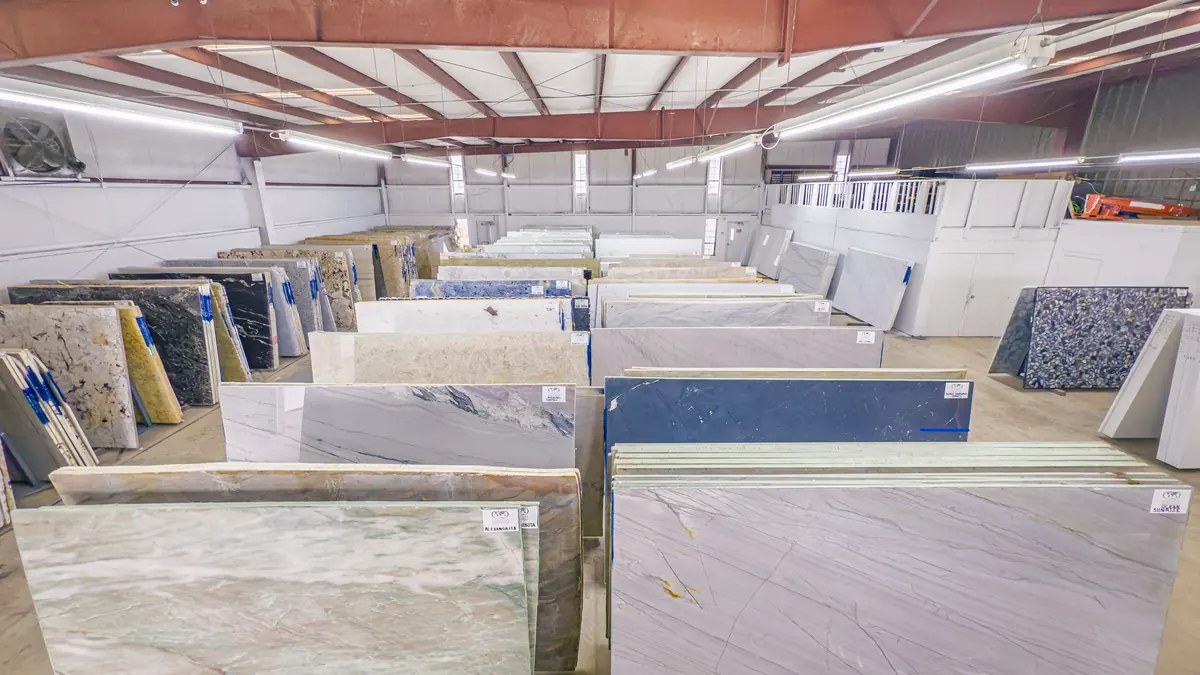
Still torn? See our quartzite slabs next to quartz in the yard, and if Taj Mahal is your favorite, our guide on Taj Mahal quartzite look-alikes covers similar looks in both materials. Browse all countertop stone guides for the other comparisons.
Frequently Asked Questions
Is quartzite stronger than quartz?
Both are very hard. Quartzite handles heat and sun better; quartz resists stains better without sealing.
Is quartzite more expensive than quartz?
Often, because of rarer slabs and slower fabrication, but price depends on the tier of each slab.
Does quartzite stain?
It can absorb oils if left unsealed. A sealer on a regular schedule prevents it.
Can quartz go outdoors?
We don't recommend it, because sun can affect the resin. Use granite or quartzite outside.
Why do people confuse quartzite and quartz?
The names are similar, and both contain quartz. One is natural stone; the other is engineered.