How to Choose a Granite Slab at the Yard: 9-Point Checklist

How to choose a granite slab: look at the whole slab in good light, check its color against your cabinets, read the pattern direction, tell natural fissures from cracks, confirm the finish, and make sure the slab is big enough for your layout and seams. Our 9-point checklist below takes about 20 minutes in the yard and keeps you from surprises on installation day.
Summary
- Always approve the actual slab, never a small sample or a photo.
- Bring a cabinet door or paint chip to judge the background color.
- Natural fissures are normal; ask us to show you how they differ from cracks.
- Check that the slab covers your layout, including the island and backsplash.
Before You Go to the Slab Yard
A good visit starts at home. Have three things ready: rough measurements of each countertop run, a cabinet door or paint chip, and two or three photos of the kitchen in daylight. With those, the yard visit becomes a decision instead of a browse.
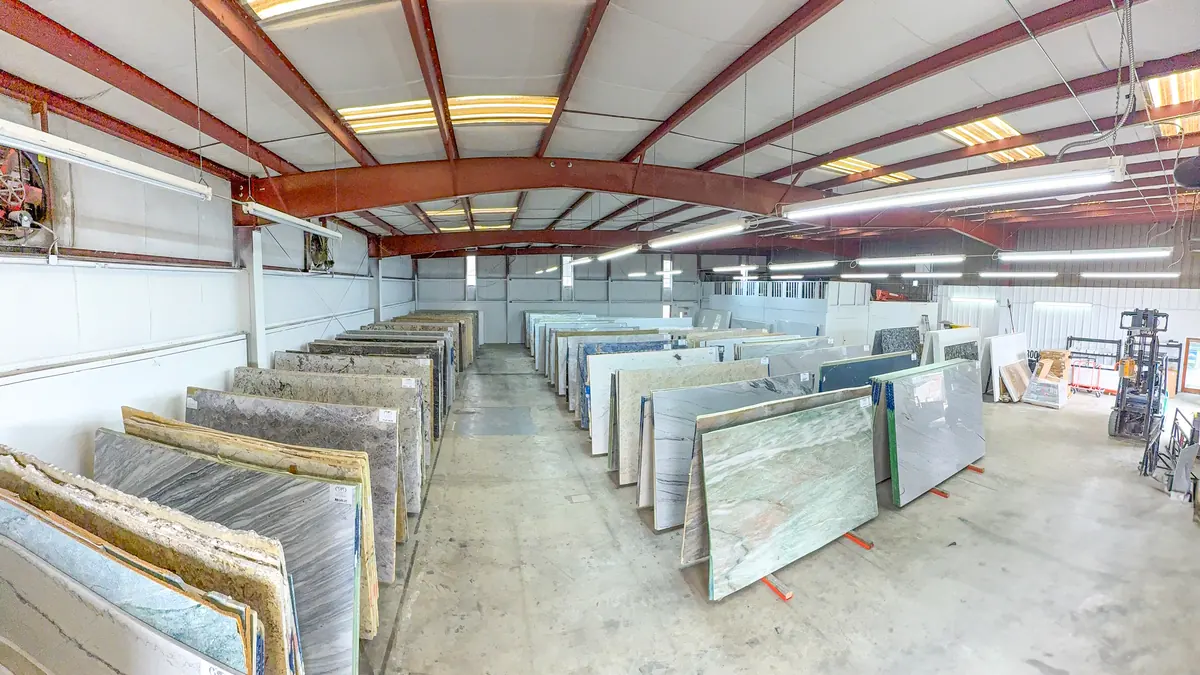
Granite is sold by the slab, and each slab is unique. That is why we always ask you to approve the real slab in our Charlotte slab yard before we cut.
The 9-Point Granite Slab Checklist
Work through these in order. The first four are about how the stone looks; the last five are about how it will work in your kitchen.
| # | Check | What to look for |
|---|---|---|
| 1 | Whole-slab view | Step back 10 feet. Does the overall color still work? |
| 2 | Background color | Hold your cabinet door against the slab, not just a sample. |
| 3 | Pattern direction | Veins and swirls run one way; decide which way they run on your counter. |
| 4 | Color shifts | Some slabs change tone from one end to the other. Know where the change falls. |
| 5 | Fissures vs cracks | Fissures are natural lines you can't feel; cracks open and can be felt with a fingernail. |
| 6 | Pits and resin fills | Small pits are common in some granites; look at them in daylight. |
| 7 | Finish | Polished, leathered or honed changes the color you see. Confirm the finish. |
| 8 | Size and yield | Is the slab long and wide enough for your longest run and the island? |
| 9 | Seam placement | Ask where seams will fall and how the pattern meets at each one. |
Is the Slab Big Enough for Your Kitchen?
Slab size decides how many slabs you need and where seams go. A long L-shaped kitchen may fit on one slab with a seam at the corner, while a big island might need its own slab to stay in one piece.
Bring your measurements and we check the yield on the spot. Our guide on how big a granite slab is explains typical sizes and how layouts change the count.
Small Project? Look at Remnants First
For a vanity, a bar top or a laundry counter, a full slab is often more stone than you need. Ask about remnant slabs for smaller projects: the same granite, in smaller pieces left from other jobs.
Bringing a Designer or Contractor
Designers and contractors are welcome in the yard without an appointment. Many like to shortlist two or three slabs before the client visit. Our article on the slab yard for designers explains how trade clients use the yard, and more countertop buying guides cover the rest of the process.
Frequently Asked Questions
Should I choose granite from a sample or the full slab?
The full slab. Samples are too small to show color shifts, pattern direction and natural fissures.
Are fissures in granite a defect?
No. Fissures are natural lines in the stone. Cracks are different, and we show you how to tell them apart.
How long should a slab yard visit take?
Plan for 20 to 40 minutes once you have a shortlist and your measurements.
Does the finish change the color?
Yes. Leathered and honed finishes usually look lighter and softer than polished.