Countertop Seams: Where They Go and How We Plan Them With You

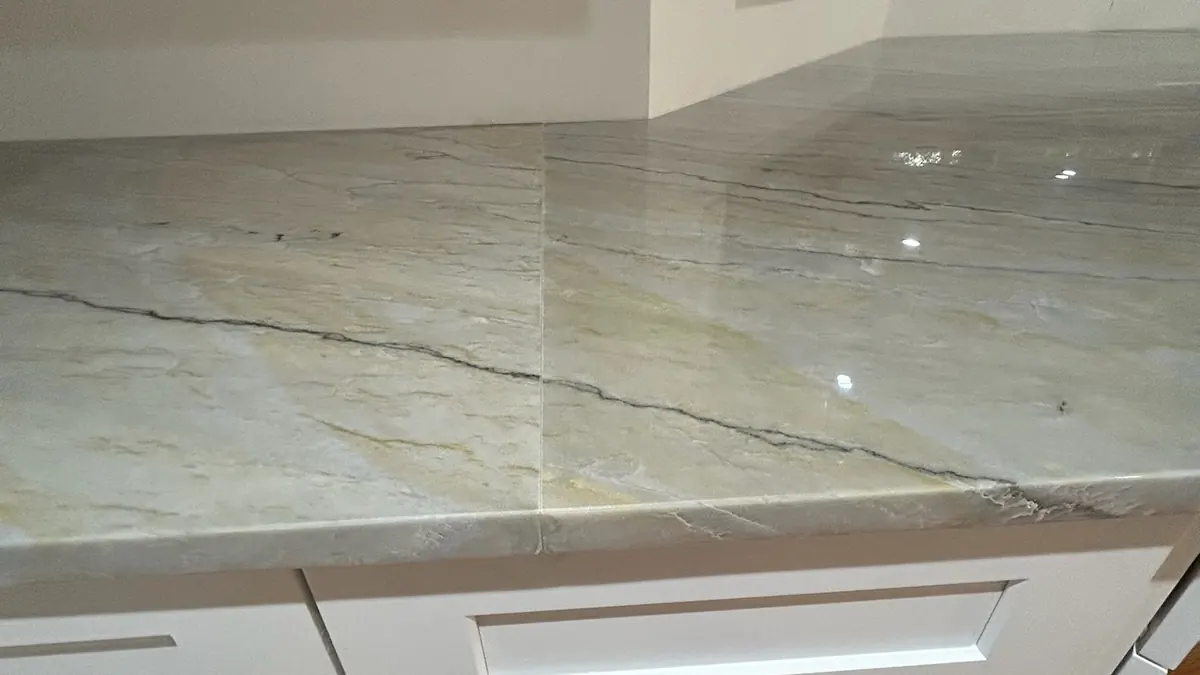
Countertop seams fall where a run is longer than the slab or where a layout turns a corner, most often at an L or U corner, near the sink or in the middle of a long run. A well-made countertop seam is tight, flush and color-matched, and on busy patterns it is hard to spot. We show you where every seam will go before we cut, so nothing is a surprise on installation day.
Summary
- Seams are needed when a run is longer than the slab or a layout turns.
- Good seams are tight, level and filled with color-matched adhesive.
- Busy patterns hide seams; solid colors and bold veins show them more.
- You approve seam placement on the layout before the slab is cut.
Why Countertops Have Seams
Stone slabs have a fixed size. When a countertop run is longer or wider than one slab, or when a layout turns a corner and the shape would waste too much stone, two pieces are joined. That joint is the seam.
Seams also protect the stone. A very long, narrow piece around a sink cutout can be fragile during transport and installation, and a planned seam is safer than a crack.
Where Seams Usually Go in Common Layouts
Every kitchen is different, but these are the usual seam spots by layout.
| Layout | Usual seam location | Why |
|---|---|---|
| L-shaped | At or near the corner | Keeps each leg a manageable piece |
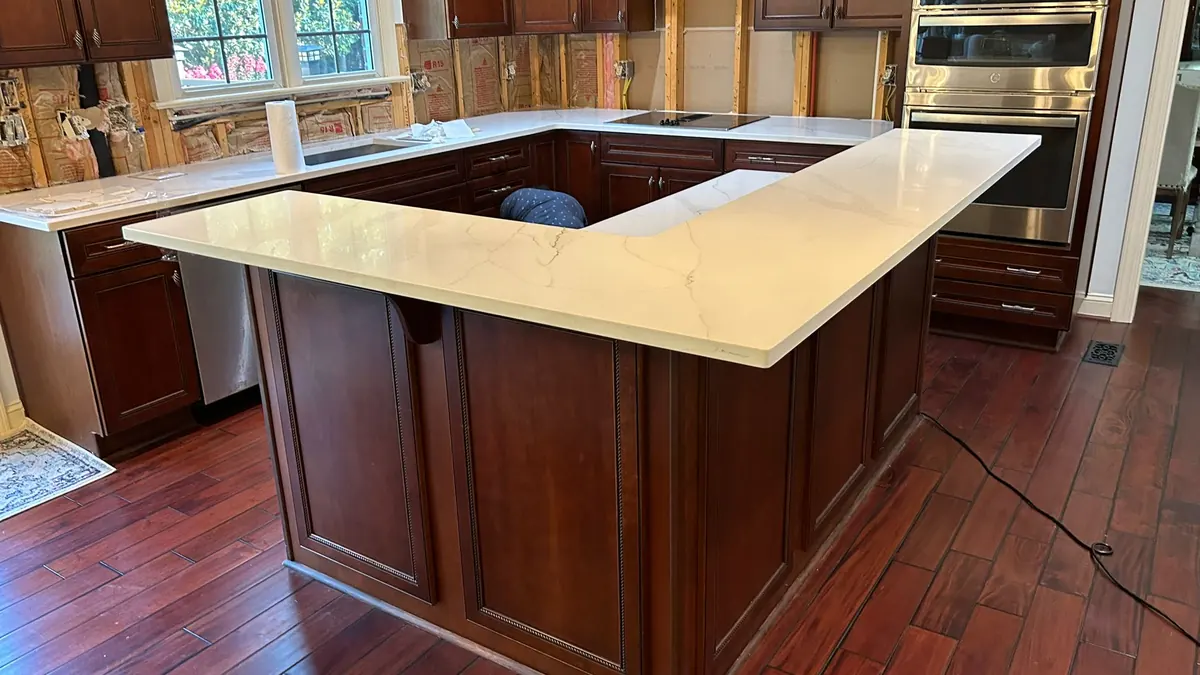
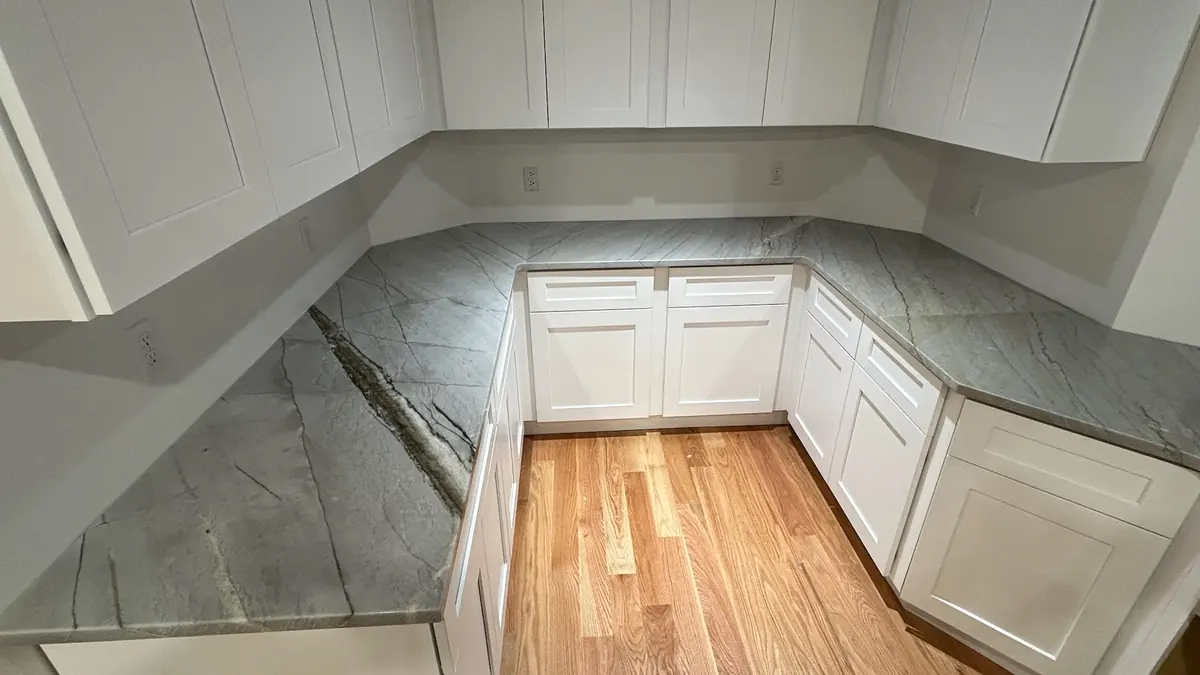
| U-shaped | At one or both corners | Three runs rarely fit one slab |
| Long straight run | Away from the sink, often near the range | The run is longer than the slab |
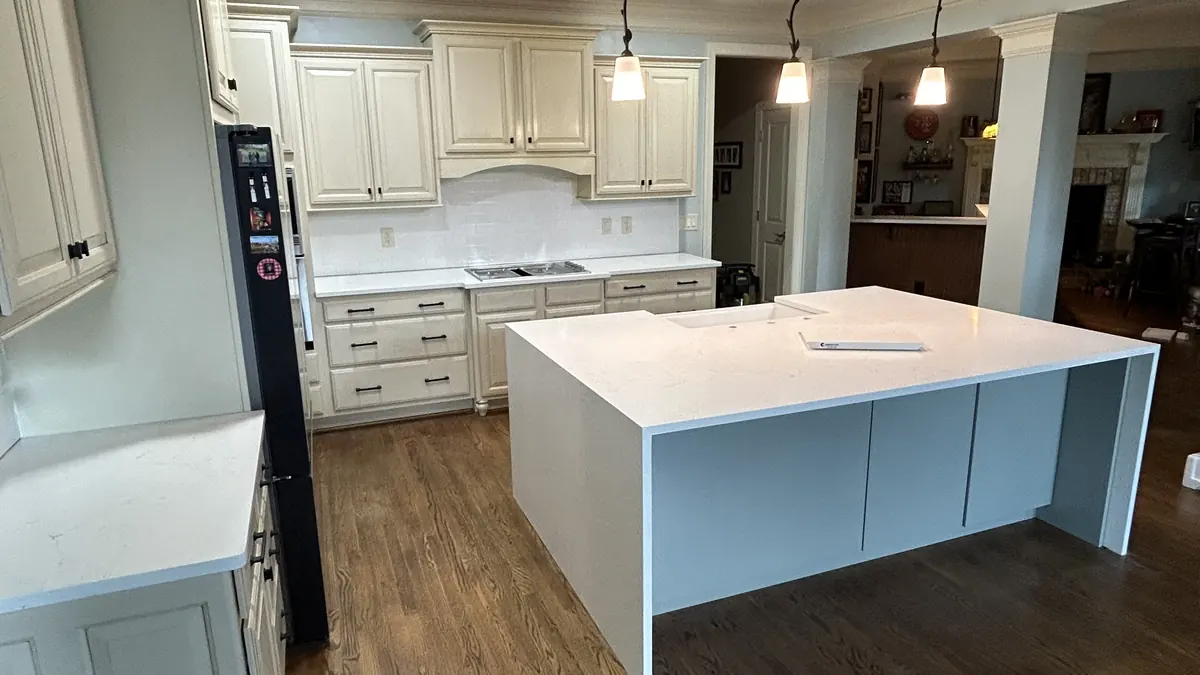
| Island | None if it fits one slab; otherwise centered | Islands are the most visible surface |
How Visible Will the Seam Be?
Visibility depends mostly on the stone, then on the fabrication.
Stones That Hide Seams
Speckled and busy granites hide seams best, because the eye can't follow a single line across the joint.
Stones That Show Seams
Solid colors and bold, directional veins make seams easier to see. With these, vein matching and placement matter more, and some homeowners choose a seam location that lines up with a natural vein.
What a Good Seam Looks Like
Tight, with no visible gap; flush, so you can't feel a ridge; and filled with adhesive tinted to the stone. The edge profile also plays a part: see our guide to countertop edge profiles.
How We Plan Seams With You
On template day, we mark your layout and show you where seams will fall. When you approve the slab, we can show how the pattern meets at each seam. Nothing is cut until you agree.
This is part of every kitchen countertop replacement. If you are keeping your cabinets, read how to replace countertops without replacing cabinets, since cabinet level affects how flush a seam can be.
Caring for Seams Over Time
A well-made seam needs no special care. Wipe spills, avoid standing on counters and don't let heavy appliances sit across a seam. If a seam ever opens or lifts, it can usually be repaired. Find more ideas in more kitchen and bath design ideas.
Frequently Asked Questions
Can I have a countertop with no seams?
Only if each piece fits within one slab. Islands often can; long L or U kitchens usually need at least one.
Where is the best place for a seam?
Away from the sink and in a spot where the pattern or a corner helps hide it.
Do quartz countertops have seams?
Yes, when a run exceeds the slab size. Quartz seams can be very tight, but solid colors make them easier to see.
Can a seam crack?
A properly supported seam rarely fails. Settling cabinets or heavy loads are the usual causes when it does.
Can an old seam be fixed?
Usually. Open or uneven seams can often be re-filled and leveled.